

Prison-to-Professional

It’s one thing to grow up poor; it’s another to grow up poor and marked by a criminal record before adulthood.
In America, poverty and incarceration intersect in a way that can permanently shape a person’s opportunities, and especially their ability to pursue a career and reestablish a sense of dignity. While we often talk about “second chances,” the reality is that many people never get a real first one.
Poverty doesn’t just increase the risk of incarceration, but it makes recovery from it almost impossible. Low-income communities are disproportionately policed, schools are underfunded, and legal resources are scarce.
For many young people, minor offenses lead to lifelong consequences. Once labeled “offender,” that label becomes a kind of social tattoo that overshadows all other identities.
Even after serving their time, formerly incarcerated individuals face rejection in nearly every domain of adult life: jobs, education, housing, and even community belonging. Structural barriers such as background checks, employer bias, and limited access to higher education reinforce the stigma. This isn’t just about punishment; it’s about the systematic removal of opportunity.
Being Marked Young
A striking number of incarcerated people enter the system as teenagers or young adults. These are formative years when most of their peers are building resumes and earning degrees. Instead, they are learning to survive within rigid institutional systems that rarely prepare them for reintegration.
By the time they are released, their peers have moved forward while they are forced to start over without money, mentorship, or social capital. Sociologically, this creates what researchers call a “broken life course,” where the natural transitions between adolescence and adulthood like school, work, and gaining independence are disrupted. Reentry programs can help, but stigma often outpaces support.
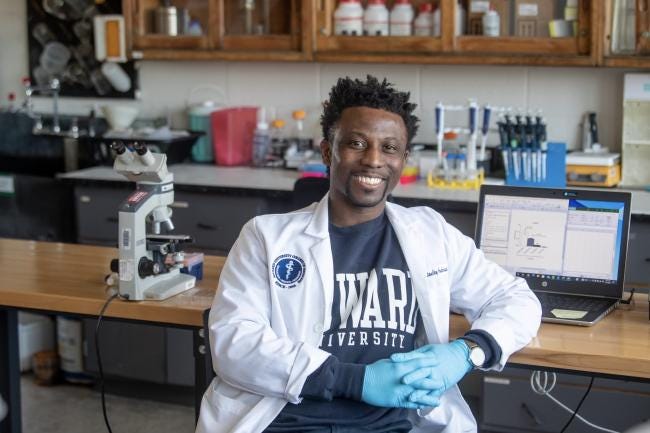
Dr. Stanley Andrisse’s story is a radical exception to this rule. Once incarcerated on drug charges in his early twenties, Andrisse was told by a prosecutor that he was “not salvageable.” Today, he is a tenured professor at Howard University, an endocrinologist, and the founder of From Prison Cells to PhD (P2P). His nonprofit is dedicated to helping others rebuild their lives through education.
In his interview with The Dig, Andrisse reflects:
“People are more than their worst mistake. Education gave me access—to rebuild, to contribute, to redefine myself.”
His organization embodies that belief. P2P mentors formerly incarcerated individuals as they pursue higher education, offering coaching, community, and advocacy. According to their website, 97.5% of P2P participants go on to pursue post-secondary education. This number completely challenges the myth that incarceration defines potential.
Reimagining the “Second Chance”
Breaking this cycle requires dismantling the systems that punish people long after their sentence ends. Policies like “Ban the Box,” which remove conviction questions from job and college applications, are small but important steps. Access to Pell Grants for incarcerated students, which was recently restored after a decades-long ban, opens doors to education that should have never been closed.
Real change can’t only come with policy, though. It requires a cultural shift. Employers, educators, and institutions must see formerly incarcerated individuals not as risks, but as assets.
Programs like P2P demonstrate that when people are given the tools to succeed, they often outperform expectations. They bring resilience, empathy, and perspective, which are qualities any workplace or university should value.
Too often, we celebrate exceptional stories like Andrisse’s while ignoring the broader injustices that make them so rare. The point is not that anyone can make it out, but that no one should have to overcome so much to be seen as worthy of a career or education.
When young people are incarcerated, their punishment extends far beyond their sentence—it seeps into their future identity. To be poor and incarcerated in America is to be told, repeatedly, that you are less than the sum of your mistakes. Yet, as Andrisse’s work shows, people are capable of immense transformation when institutions step aside and let them.
A Society That Believes in Redemption
If we truly believe in rehabilitation, we have to design our systems around it. That means investing in education both inside and outside prison walls, removing barriers to employment, and challenging the narratives that equate incarceration unequivocally with moral failure.
As Andrisse’s journey shows, education is not just a personal salvation—it’s a societal one. Each person who makes it from a prison cell to a Ph.D. or a stable career is a testament to what happens when we replace stigma with opportunity.
The question is not whether redemption is possible, but rather whether we’re willing to make it accessible to everyone.